

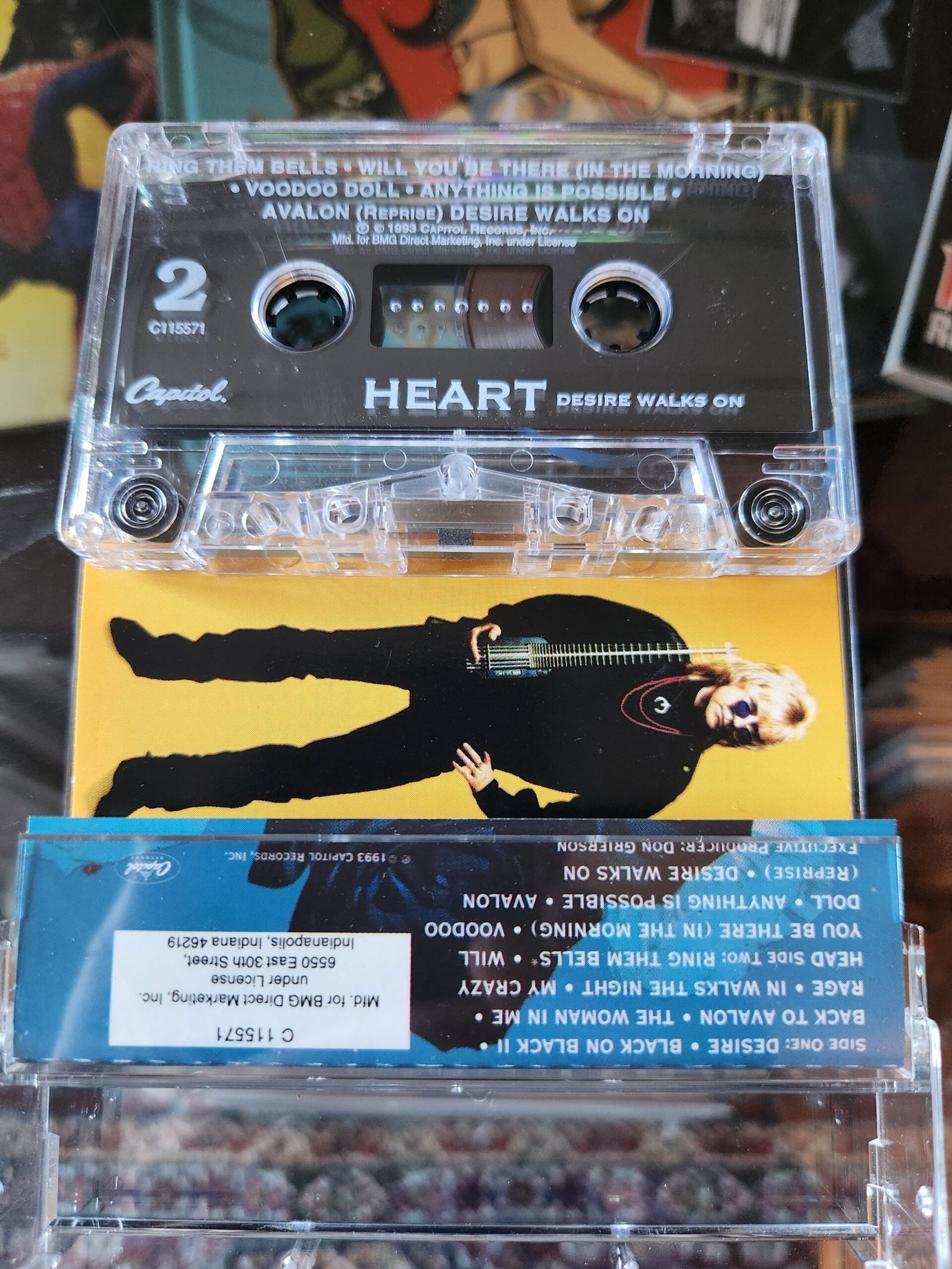
Description
Desire Walks On is the eleventh studio album by the American rock band Heart, released in 1993. It marks a significant shift for the band in the early ’90s as they attempted to navigate the changing musical landscape dominated by grunge while returning to a more guitar-driven, self-penned rock sound.
- Artist: Heart
- Release Date: 1993
- Musical Style: Hard Rock, AOR, Pop Rock, with elements reflecting the Seattle music scene.
Context and Shift in Sound: The album followed a successful but commercially focused period for Heart in the mid-to-late ’80s, where their biggest hits were often written by external songwriters. For Desire Walks On, sisters Ann and Nancy Wilson took a more hands-on approach to songwriting, co-writing the majority of the album. The sound is generally a return to a harder, more aggressive rock feel reminiscent of their earlier work, yet it retains some of the slick production qualities of their 80s material.
Key Tracks and Highlights:
- “Will You Be There (In The Morning)”: The album’s major single, written by Robert John “Mutt” Lange (famous for producing Def Leppard and Shania Twain). It is a classic power ballad that provided the album with its main commercial success.
- “Black on Black II” and “Rage”: These tracks showcase the band’s deliberate return to a heavier, guitar-based hard rock sound, with Ann Wilson’s powerful vocals firmly at the forefront.
- “The Woman in Me”: A soulful, rock ballad that received airplay and highlighted Ann Wilson’s vocal versatility.
- “Ring Them Bells”: Perhaps the most surprising track, it’s a cover of a Bob Dylan song featuring a vocal appearance by Layne Staley of Alice in Chains, underscoring Heart’s connection to the Seattle music scene that was globally dominant at the time.
Significance: Desire Walks On was Heart’s final studio album of the 20th century, preceding an 11-year gap until their next studio release, Jupiters Darling (2004). It is also the last studio album to feature long-time core members, guitarist Howard Leese and drummer Denny Carmassi. The album represented a genuine, if commercially challenged, attempt by the Wilson sisters to reclaim their artistic identity in a rapidly evolving music environment.